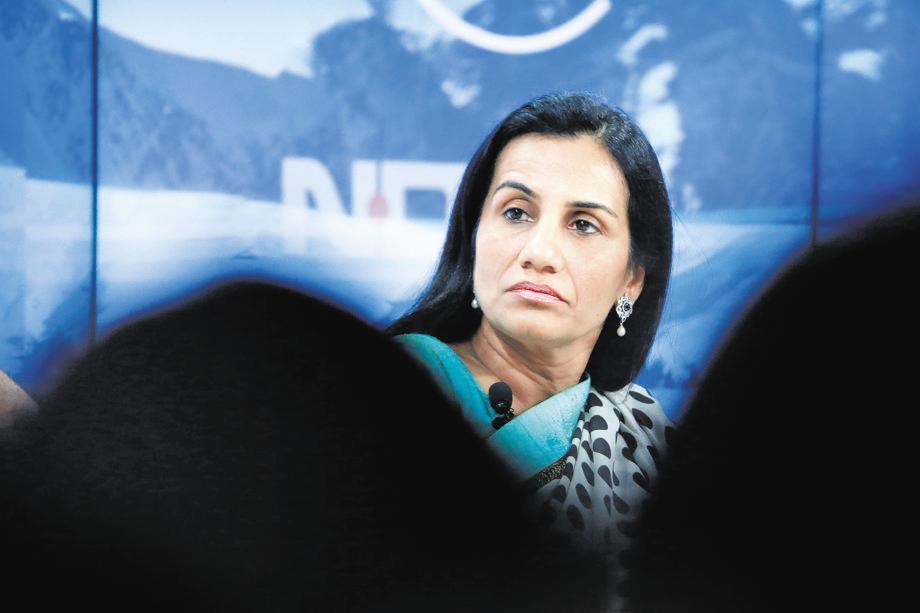
Eleven in-principle licences for payments banks have been a pleasant surprise. Not too many were expecting the banking regulator to be so liberal. In the next few weeks, when Reserve Bank of India (RBI) announces its nod for small business banks, we may see an equal number of new entrants, if not more. This is good news for customers, but the banking industry doesn’t seem to be too happy. What many chief executives have been saying in private, Arundhati Bhattacharya, chairman of the country’s largest lender State Bank of India (SBI), has said on record. Recently, she spoke on the “risks” associated with the launch of new banks and wondered whether it would lead to “unhealthy” competition. “It’s a dog-eat-dog world out there,” Bhattacharya has said.
Incidentally, SBI has teamed up with Reliance Industries Ltd (RIL) to set up a payments bank. It will hold a 30% stake in the bank, the maximum permitted by RBI.
Bhattacharya is also apprehensive that the new banks may cannibalize the customer base of the incumbents. Earlier, she had said that the payments banks could wean away low-cost savings bank deposits from the established full-service players, denting their ability to price loans at a competitive level.
Is Bhattacharya nervous? Or, is this her way of telling the industry to pull up socks and get ready to face the new players? If indeed she wants to give a clarion call to the industry and prepare the state-owned banks for impending competition, her concerns seem to have a basis. India’s private banks have been growing at a steady pace while the public-sector banks have been faltering.
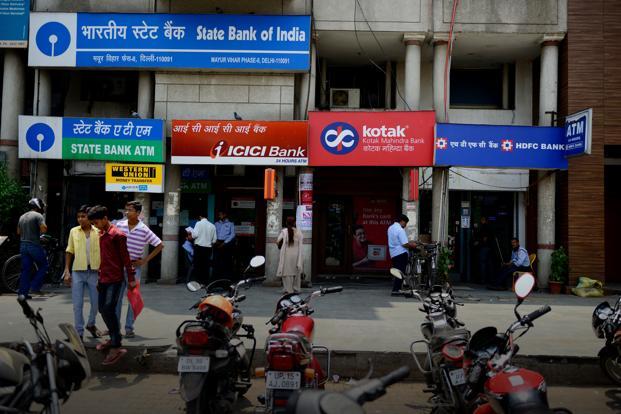
In the June quarter, SBI’s net interest income grew at 3.62% from the year-ago period, while that of Punjab National Bank (PNB) actually declined over 6% even as Bank of Baroda (BoB), another large public-sector bank, recorded close to 4% growth. In contrast, India’s largest private bank ICICI Bank Ltd’s net interest income grew at close to 14%; HDFC Bank Ltd’s 23.54% and Axis Bank Ltd’s 22.53%. Similarly, SBI’s net profit growth in the June quarter was 10.25% even as both BoB and PNB recorded a sharp drop in net profits.
Finally, when it comes to the quality of assets, SBI’s gross non-performing assets, or NPAs, as a percentage of loan assets, stood at 4.29% in June, higher than BoB’s 4.13% and lower than PNB’s 6.47%, but its private peers have far lower NPAs—HDFC Bank 0.95%, Axis Bank 1.38% and ICICI Bank 3.68%. Indeed, SBI has a much higher base in terms of deposits and advances than its private peers but the difference between other large public-sector banks and private banks is not that great that can justify the wide gap in growth in almost every segment of business.
“New banks will have no legacy and won’t be held hostage by industry agreements,” Bhattacharya has said. Industry-wide wage pact is one of the many issues that have been plaguing the public-sector banks which have about 70% market share in assets. The industry pact restricts a bank’s ability to pay and attract talent; it does not also allow a bank to offer a differentiated pay structure for employees with different skills and expertise.
For instance, if the public-sector banks had the freedom to offer differential wages, they would have been able to develop a rural cadre for agriculture and other small-ticket loans. The government ownership is also a burden for them, as often these banks are being persuaded to take exposure to certain sectors where private banks are cautious to tread. They are also always under the scanner of investigation agencies, and this creates a fear psychosis among senior bankers.
Simply put, there is no level playing field.
But this cannot be an excuse for not opening up India’s banking sector. In other words, the banking regulator cannot be held hostage by the public-sector banks. They must prepare themselves for the disruptions that the industry is set to witness in the next couple of years. One new private bank started operations last week and another will start in October. Eleven payments banks, which got RBI’s in-principle licences on 19 August, have 18 months to meet all requirements and start working. They can collect deposits up to Rs.1 lakh, provide payments and remittance services, and distribute third-party financial products. Unlike regular banks, they won’t be able to give loans and issue credit cards, but they can provide debit cards and Internet banking.
RBI may give in-principle licences to a dozen-odd small business banks, which too will have 18 months to get ready for starting operations. Besides, four foreign banks have already sought the regulator’s approval for local incorporation and many more are expected to follow suit. Once locally incorporated, they will get near-national treatment in terms of branch network, and may be even allowed to buy out local banks.
All these will change India’s banking landscape dramatically. While payments banks will eat into the fee income of regular banks by offering smart payments channels using mobile telephony, small banks may woo away depositors from them even as locally incorporated foreign banks can develop sophisticated products both for corporations as well as individuals.
Despite this, it is not the end of the road for state-run banks, provided they are ready to reinvent themselves—something Life Insurance Corp. of India (LIC) tried to do when the insurance sector opened up. They need to seize the opportunities that will come on their way along with the challenges. For instance, the payments banks’ investment in government bonds will free up money for other banks to give loans. Also, as a recent SBI research report has pointed out, these banks will encourage people to reduce cash transactions, and this will swell banks’ deposit portfolio. Transactions at payments banks will help build customer profile, leading to more retail loans. The market can accommodate a hundred more new banks.