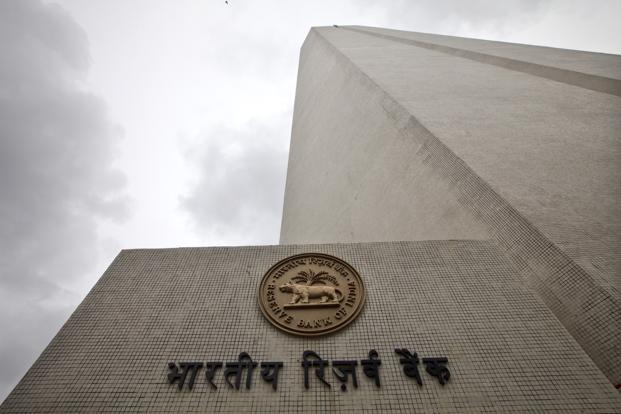
The government has revised the fiscal year 2014 economic growth to 6.9% from 4.7% after changing the base year and calculation methods of gross domestic product or GDP. However, everybody is not excited about the increase in growth, based on a new set of data. For instance, Reserve Bank of India (RBI) governor Raghuram Rajan has declined to say anything about the numbers till he “understands them better”. According to him, it would be “premature to take a strong view”, based on the updated data. He cannot be blamed for his lack of enthusiasm simply because despite a vastly improved sentiment, certain pockets of the economy are seeing increasing stress. Nothing illustrates this better than the performance of non-banking financial company Mahindra and Mahindra Financial Services Ltd. Its net profit in December quarter dropped 17% and loan disbursements declined for the fourth quarter in a row. Bad loans now constitute 7.1% of its loan book—the highest in the last four years. The last time M&M Financial Services had seen its bad loans around this level was in 2007-08.
The provision cover is now down to 54%, from at least 80% two years ago. The change in the non-performing asset (NPA) recognition norms is expected to hurt M&M Financial Services further. Currently, a loan turns into an NPA when a borrower is not able to make payments for 180 days. The period is being halved to 90 days. M&M Financial Services follows a 150-day norm. As M&M Financial Services predominantly caters to customers in the rural and semi-urban India, its performance mirrors the reality in this segment.
In a conference call with analysts, M&M Financial Services managing director Ramesh Iyer in the third week of January said, contrary to popular belief, that things are not getting better and he has not seen any major improvement at the grassroots level. “…Look at sales of vehicles, tractors or any activity around semi-urban, rural side, you will get the reflection of the same in terms of rural economy continuing to remain under pressure,” he said. According to him, below-average monsoon and drop in minimum support price for grains have led to the cash flow pressure for the company’s customers. And when there is pressure on the cash flow, it does impact the entire business. It started off with heavy commercial vehicles but over a period of time, it has impacted every commercial segment—light commercial vehicles or LCVs, sub-one-tonne vehicles, small goods carrying vehicles and even three-wheelers. As far as the tractor segment is concerned, at least 40% of cash flow comes from haulage application and as most projects are not on schedule, the contractors are not getting their payments on time and, in turn, they are not able to make payments to those from whom tractors are hired.
Iyer’s conference call with the analysts clinically dissected the state of affairs in almost every Indian state. According to him, the southern states have been going through a “major mess”—in Karnataka, mining is not the only problem; there have been issues in paddy and sugar cane as well. In Maharashtra, the support price for cotton is so low that cash flow has dried up and sugar cane supplied to factories has not been paid for. Similarly, soya is a “disaster” in Madhya Pradesh and “paddy is moving towards Rajasthan” because of low support price. On top of these, infrastructure projects in Madhya Pradesh are “a complete drag”. Most Indian states have been plagued with multiple problems.
Now, the question is: since M&M Financial Services is into collateral-backed lending, why can’t the company seize the collaterals and sell them to recover dues? With so much of discount going on for new vehicles, there has been an impact on the resale price as well. “We have to be very cautious in deciding on whether we want to take back vehicles and sell them and if we do that, what kind of loss we would likely to book,” Iyer has said. Typically, tractors, LCVs, excavating equipment are not seized even after defaults as the borrowers maintain them, but this is not the case with the owners of three-wheelers such as Tata Ace and Mahindra Maxximo. The cash flow of customers in these segments is so stretched that they cannot even maintain them. However, even after possessing them and selling them, the lender is booking losses.
Iyer’s assessment of the economic scenario is pretty grim. “Commercial vehicle is still not showing trend. Tractors are falling by the day… I think we are seeing pressure points all around, whether it’s… the economic cycle. … the farm cycle… From the sales point of view, even for the same volume of business, the disbursement value is low, because the discounts continue to happen.”
He believes the company will have to live through the pressures for a while now, at least till next monsoon. “…Until we start seeing revival of economic activities, …improvement in sales of vehicles and tractors, and customers walk into the dealership on their own, I don’t think we will want to say things are getting normalized at the market place.”
RBI’s bi-monthly policy statement, released last week, also says the revision in the base year for GDP and GDP calculation method may prop up the growth figures but growth expectations should be tempered as lead indicators such as tractor and motorcycle sales and slowing rural wage growth point to subdued rural demand. The autumn 2014 kharif farm income contracted and the summer 2015 rabi harvest income is expected to remain flat. Five years ago, rural demand had rescued Indian economy from the impact of a global meltdown in the wake of the collapse of Lehman Brothers Holdings Inc; now, the challenge is revival of rural demand. One way of doing it could be the hike in minimum support price of agri commodities as has been recommended by the M.S. Swaminathan committee.